
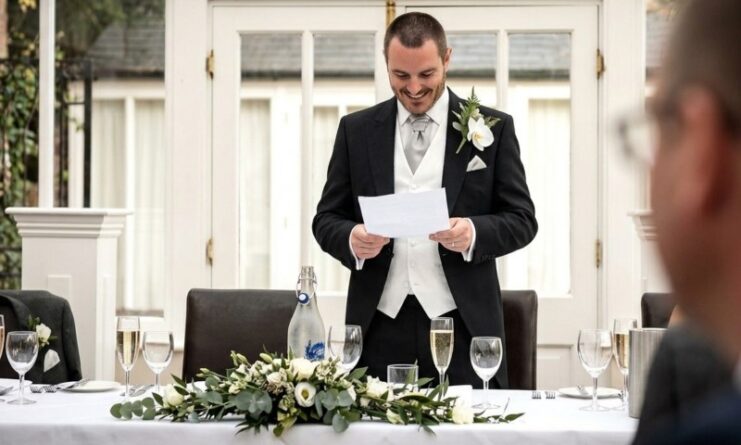
A groom speech has a clear purpose: thank guests, acknowledge family, celebrate your partner, and end with a toast.
It carries a mix of practical duties and personal emotion. You need to mention important people, but you also need to speak with warmth, honesty, and care.
Strong groom speeches feel personal, sincere, and concise. Rather than trying to impress every guest, aim to sound like yourself.
Keep most of your focus on your relationship, your partner, and your gratitude for everyone who helped make the wedding day possible.
What Should a Groom Speech Include?
A groom speech works best when it has a clear shape. Guests should be welcomed, important people should be thanked, and your partner should feel like the main focus.
Aim for a speech that feels organized without sounding stiff.
A groom speech should begin with a warm welcome to everyone in attendance.
Thank guests for sharing the day with you, especially anyone who traveled a long way or made extra effort to be present.
Next, include thank-yous for family, friends, and the wedding party. Mention both sides fairly, not just your own relatives or friends.
Your speech should also include a heartfelt section about your partner, since that is usually the most meaningful part of the groom’s speech.
Add one short personal story or anecdote.
Strong options usually connect to an important moment in your relationship, such as:
- How you met
- Your first date
- A meaningful relationship moment
- A funny but kind wedding planning memory
- A moment when your partner showed a quality you love
Keep humor light and suitable for all ages.
Finish with a clear toast to your partner, your future together, and everyone who helped make the day special.
How Long Should the Groom Speech Be?
Length matters because wedding guests are usually listening between meals, photos, conversations, and other speeches.
Aim for 5 to 7 minutes, or roughly 700 to 1,000 words. That length gives you enough space to thank key people, speak about your partner, share one story, and end with a toast.
A 5 to 10 minute speech is usually enough. Anything longer can start to feel like a monologue, especially during a busy wedding reception.
Practice aloud and cut anything repetitive. If your speech goes over 8 to 9 minutes, trim it. A tight, sincere 5-minute speech is usually stronger than a rambling 12-minute speech.
After your first version, try cutting around 20%. Shorter stories, cleaner jokes, and simpler thank-yous often make the final speech stronger.
A grammar checker can also help catch awkward wording, repeated phrases, and small mistakes before you practice aloud.
A few checks can help you manage timing before the wedding day:
- Read at normal speaking speed, not silently
- Pause where guests may laugh or react
- Remove repeated thank-yous
- Shorten any story that takes too long to reach its point
- Practice with printed notes or cue cards
- When Does the Groom Give His Speech?
Speech timing depends on the couple’s schedule, traditions, and reception style. Some weddings follow a classic order, while others move speeches earlier so nervous speakers can relax.
Traditionally, the groom speaks after the father of the bride or an equivalent speaker.
In the traditional UK order, the groom usually speaks before the best man.
A groom’s role often sits in the middle of the speeches.
A father of the bride or equivalent speaker usually sets the scene, the groom bridges the families and thanks everyone, and the best man often finishes with humor.
Some couples schedule speeches before the meal so speakers can relax.
Others place them after the meal as part of tradition. Either option can work, as long as the schedule feels comfortable for the couple and the guests.
Groom Speech Thank-You Checklist
View this post on Instagram
Gratitude is one of the main reasons a groom gives a speech.
A good thank-you section makes guests and family feel appreciated, but it should not take over the whole speech. Keep each thank-you sincere, specific, and brief.
Thank the Guests
Start by thanking everyone for attending. A simple welcome helps set a warm and gracious tone.
Give special mention to guests who traveled a long way.
Many people may have taken time off work, rearranged plans, booked travel, or made personal sacrifices to celebrate with you.
Acknowledging that effort makes guests feel valued.
Small details can make this thank-you sound more personal. You can mention effort in a few natural ways:
- Long flights or long drives
- Guests who changed work schedules
- Friends or relatives who helped with planning
- People who supported the couple before the wedding day
Keep this section short. Guests do not need a long explanation, but they will appreciate a sincere thank-you.
Thank Both Families
Family thank-yous should feel warm and balanced.
A groom speech often brings two families together in front of the whole room, so this part should feel gracious rather than formal.
Thank your parents or guardians for their support, upbringing, and guidance.
A specific example can make this part feel more meaningful.
You might mention a lesson they taught you, a value they passed on, or a way they supported you during wedding planning.
Thank your partner’s parents or family for welcoming you into their family.
Speak warmly and naturally. Mention siblings, grandparents, step-parents, guardians, or chosen family members if they have played an important role.
Names can help complicated family situations sound natural. Consider using names when you mention:
- Step-parents
- Guardians
- Chosen family
- Close relatives who helped raise or support either partner
- Family members who played a major role in the wedding
When both parents are present, try to thank them individually where possible. Names make the speech feel more personal than formal titles alone.
Thank the Wedding Party
View this post on Instagram
A wedding party often does much more than stand beside the couple.
Friends and relatives may help with planning, logistics, nerves, travel, and last-minute problems. A short thank-you can recognize that effort without slowing the speech down.
Thank the best man, groomsmen, bridesmaids, maid of honor, ushers, and anyone else who helped with the wedding day.
Make sure both sides of the wedding party are included.
Mention helpers who gave rides, made decorations, did readings, played music, baked the cake, supported the ceremony, or helped behind the scenes.
Small contributions can mean a lot, and a quick mention shows appreciation.
Thank staff, suppliers, and the celebrant only if they are present or played a visible role during the day.
Keep this section brief so it does not turn into a long list.
Thank Your Partner
Your partner should be the emotional center of the speech.
Thank-yous to guests and family matter, but the room is also waiting to hear what you love about the person you just married.
Make your partner the emotional center of the speech.
Compliment them sincerely and use specific details rather than broad lines that could fit anyone.
Say what you love about them. Mention habits, qualities, values, or moments that show who they are. Thank them for marrying you, and say why you are excited to begin married life together.
Specific details help this section feel personal. You might speak about:
- A habit that makes you smile
- A way they support you
- A quality you admire
- A small everyday moment that says a lot about them
- A reason you feel lucky to marry them
A strong partner section should feel honest, personal, and focused. Guests want to hear why this person matters to you, not just a polished compliment.
Storytelling Tips for the Groom Speech
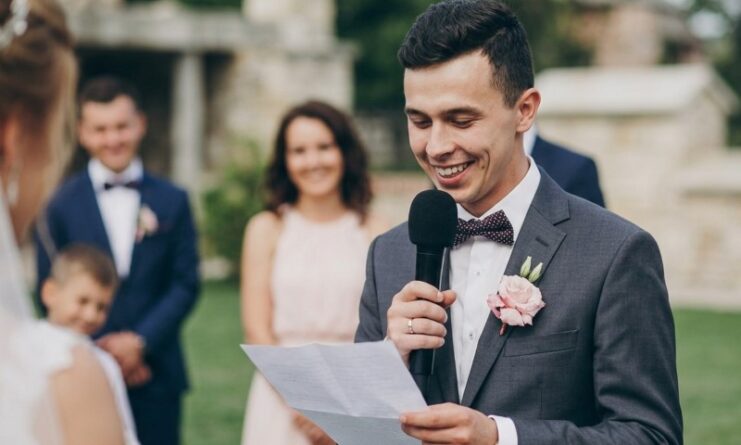
A story gives the speech personality. Rather than trying to tell your whole relationship history, choose one moment that shows something true about your partner or your relationship.
Choose one short story about your relationship. One good story is stronger than several rushed ones.
Good options include how you met, your first date, the moment you knew your partner was right for you, a funny wedding planning moment, or a memorable but light-hearted relationship story.
Make sure the story says something positive about your partner or your relationship.
A story should not just be funny. It should show your partner’s kindness, patience, humor, loyalty, confidence, or another quality you love.
A useful story usually has a simple purpose. Before you include it, check that it does at least one of these things:
- Shows why your partner matters to you
- Gives guests a small glimpse into your relationship
- Creates a warm laugh without embarrassing anyone
- Leads naturally into a compliment
- Fits the tone of the wedding
Keep stories short and avoid repeating stories already told in earlier speeches.
Use specific details about your partner’s personality instead of clichés. Small details often feel more powerful than big generic statements.
How to Use Humor Without Going Too Far
Humor can make a groom speech feel relaxed and natural. It should never make your partner, family, or guests uncomfortable.
Kind humor almost always works better than risky humor.
Use gentle, wedding-appropriate humor. Safe humor can include self-deprecating jokes, light wedding planning stories, or funny but kind memories.
Balance humor with heartfelt emotion. A groom speech should not feel like a stand-up routine. Jokes work best when they support the speech rather than take it over.
Avoid jokes about exes, money, sex, family drama, or anything that embarrasses your partner. Also avoid risqué or edgy jokes that could offend older guests or make the room uncomfortable.
Do not force a big joke if it does not suit your personality. A sincere opening can work just as well as a funny one.
Simple Groom Speech Structure
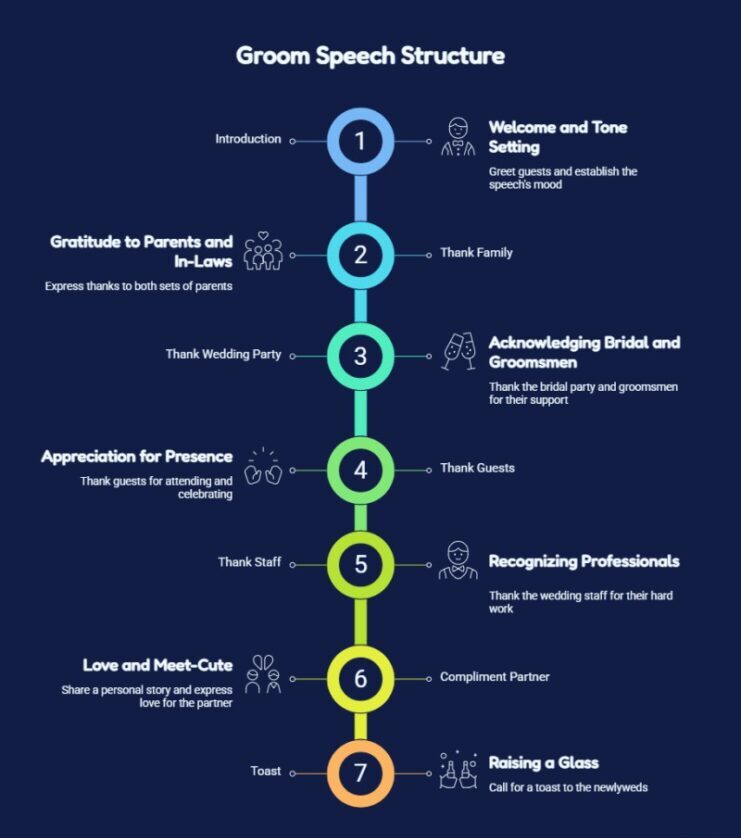
A simple structure helps you stay calm and keeps guests with you. Use it as a guide, not a script. Natural wording matters more than perfect order.
Start by welcoming the guests. Thank them for attending and give a special mention to anyone who traveled a long way.
Thank the father of the bride or equivalent speaker if relevant. Then thank both families, including parents, guardians, siblings, grandparents, step-parents, or chosen family members as appropriate.
Thank the wedding party and helpers. Keep this part short, but make sure both sides are acknowledged.
Speak about your partner next. Share what you love about them, why you are grateful to marry them, and why you are excited for married life.
Add one short story that shows something positive about your relationship. Include light humor if it feels natural. End with a clear toast.
Summary
A great groom speech should be grateful, personal, and focused on your partner.
Keep it simple, sincere, and well-timed.
Your speech does not need to be perfect. It needs to sound like you, thank the right people, and celebrate the person you just married.